The heart of the temple
Fire
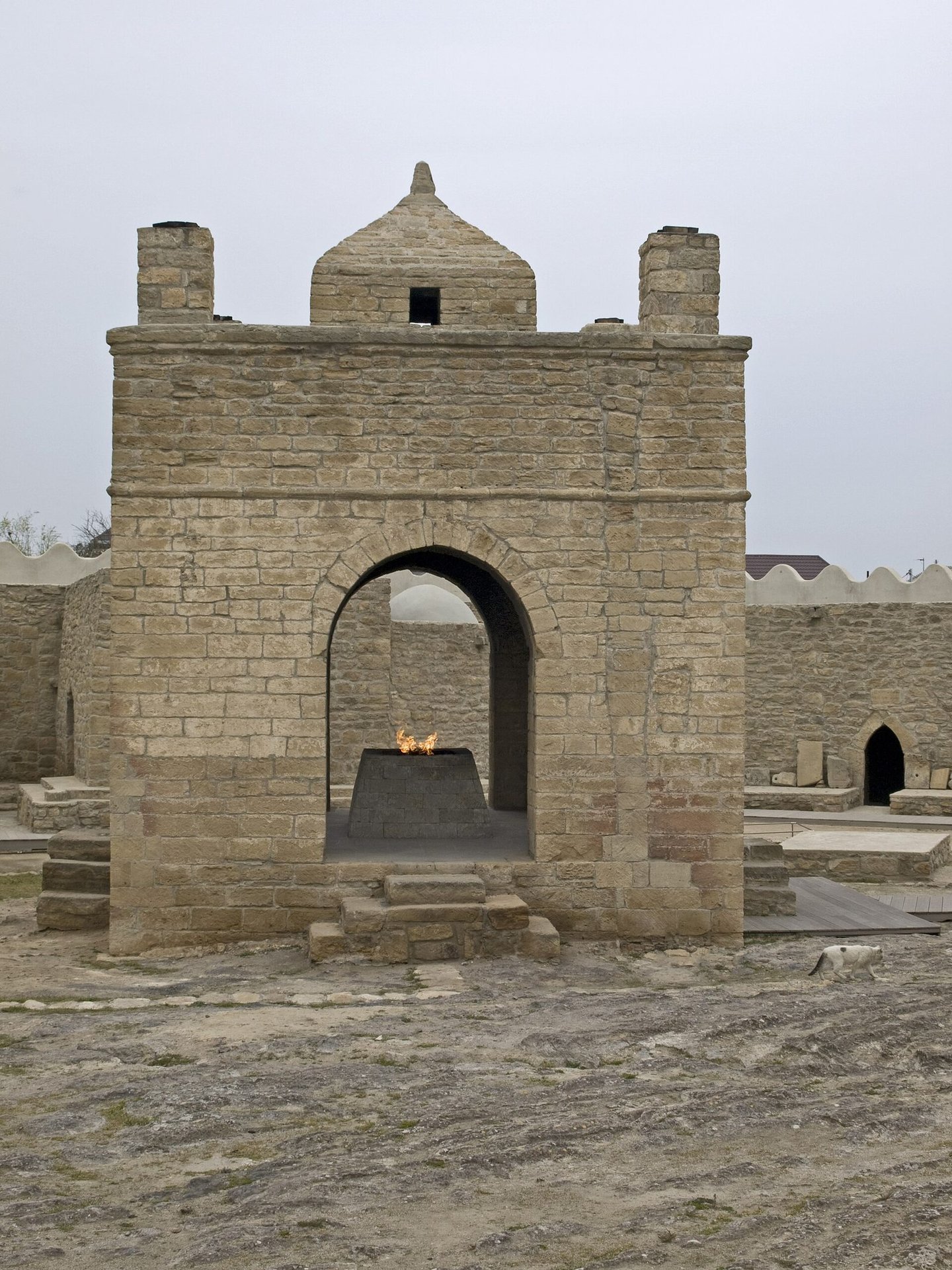
Fire was always the heart of Ateshgah — not lit by human hand but rising from the earth itself. It was this wonder of nature that made the place sacred.
The heart of the temple
Fire was always the heart of Ateshgah — not lit by human hand but rising from the earth itself. It was this wonder of nature that made the place sacred.
The Absheron peninsula is rich in natural gas, which for centuries seeped to the surface and ignited in the air. These unquenchable fires gave Azerbaijan its name — the "Land of Fire".
Fire
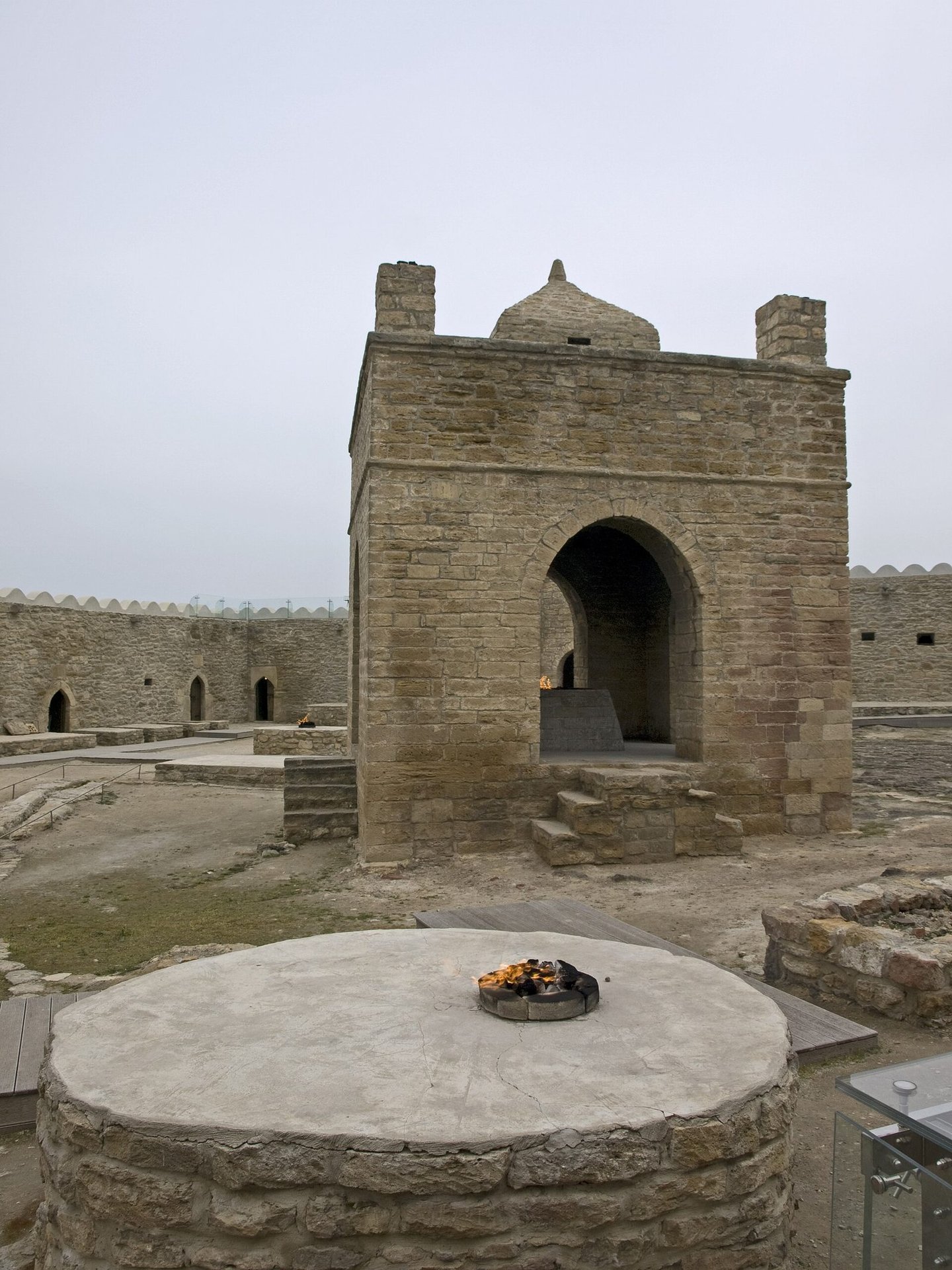
Above the central altar and in the cells burned flame fed by underground gas. For centuries travellers described the "eternal fires" of Surakhani as one of the wonders of the East.
But in 1969 the natural flame went out: intensive gas extraction nearby depleted the underground reserves. So that the temple would not be left without fire, it is now supplied from the city gas grid.
Fire
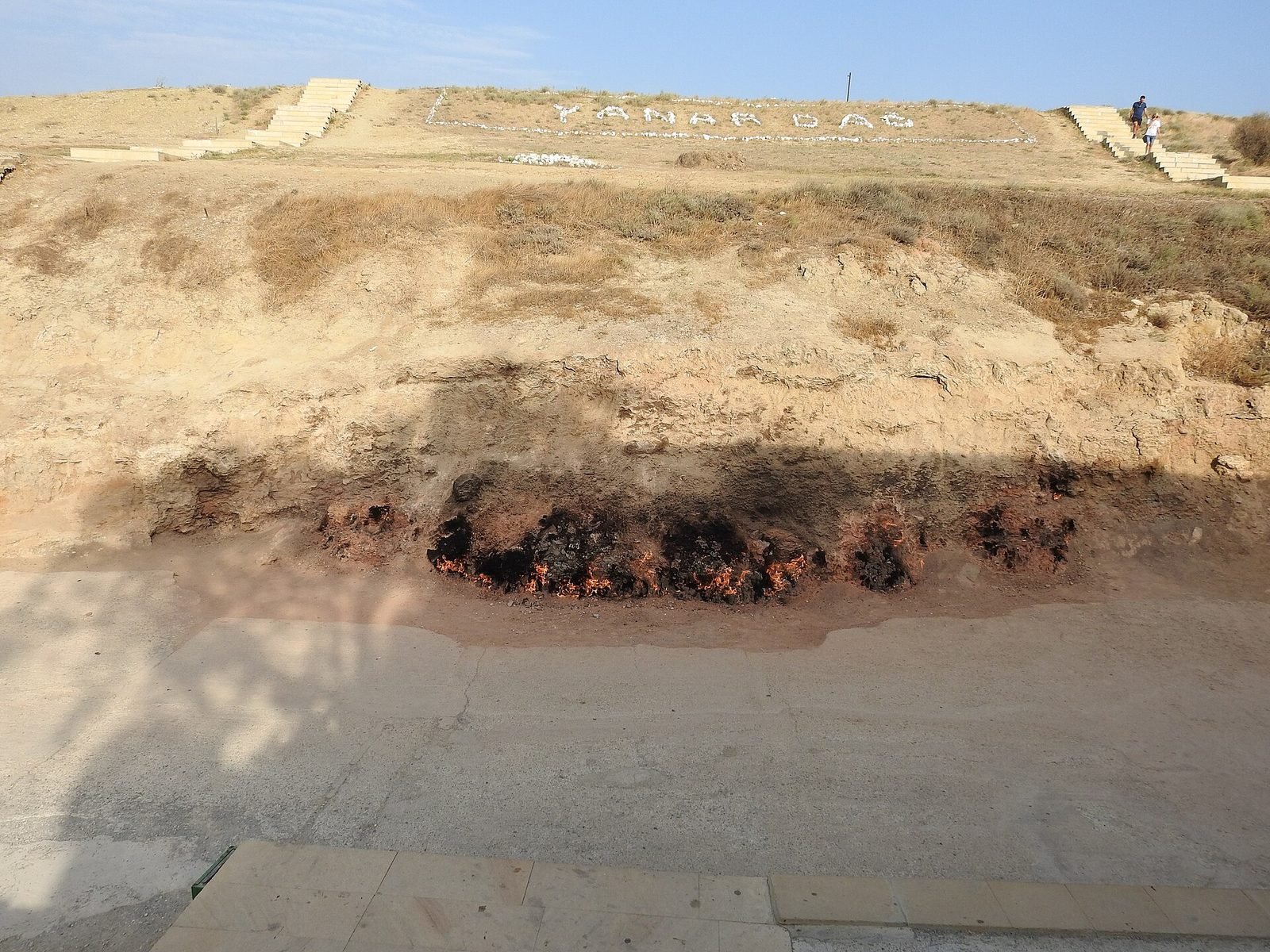
Ateshgah is not the only fire of Absheron. Nearby burns Yanar Dag — the "burning mountain", whose slope has blazed for centuries thanks to escaping gas.
Together they explain why fire became a symbol of Azerbaijan — from ancient shrines to the tongues of flame on its modern emblem and architecture.
The nature of the fire
The flame was fed by gas escaping from the depths of Absheron.
Gas extraction depleted the reserves and the natural fire went out.
The flame in the temple is kept burning with gas from the city grid.
A burning hill nearby — another eternal fire of Absheron.
The exact date the natural fire went out differs across sources; the commonly given date is the late 1960s.