How it came to be
History
The present temple is relatively young — about three centuries old. But the ground it stands on was revered long before: flame rising from the earth drew people here from the most ancient times.
How it came to be
The present temple is relatively young — about three centuries old. But the ground it stands on was revered long before: flame rising from the earth drew people here from the most ancient times.
Ateshgah is a story of a great trading world: merchants and pilgrims from India crossed the Caspian and the Silk Road, and at the Absheron fire they found both faith and shelter.
History
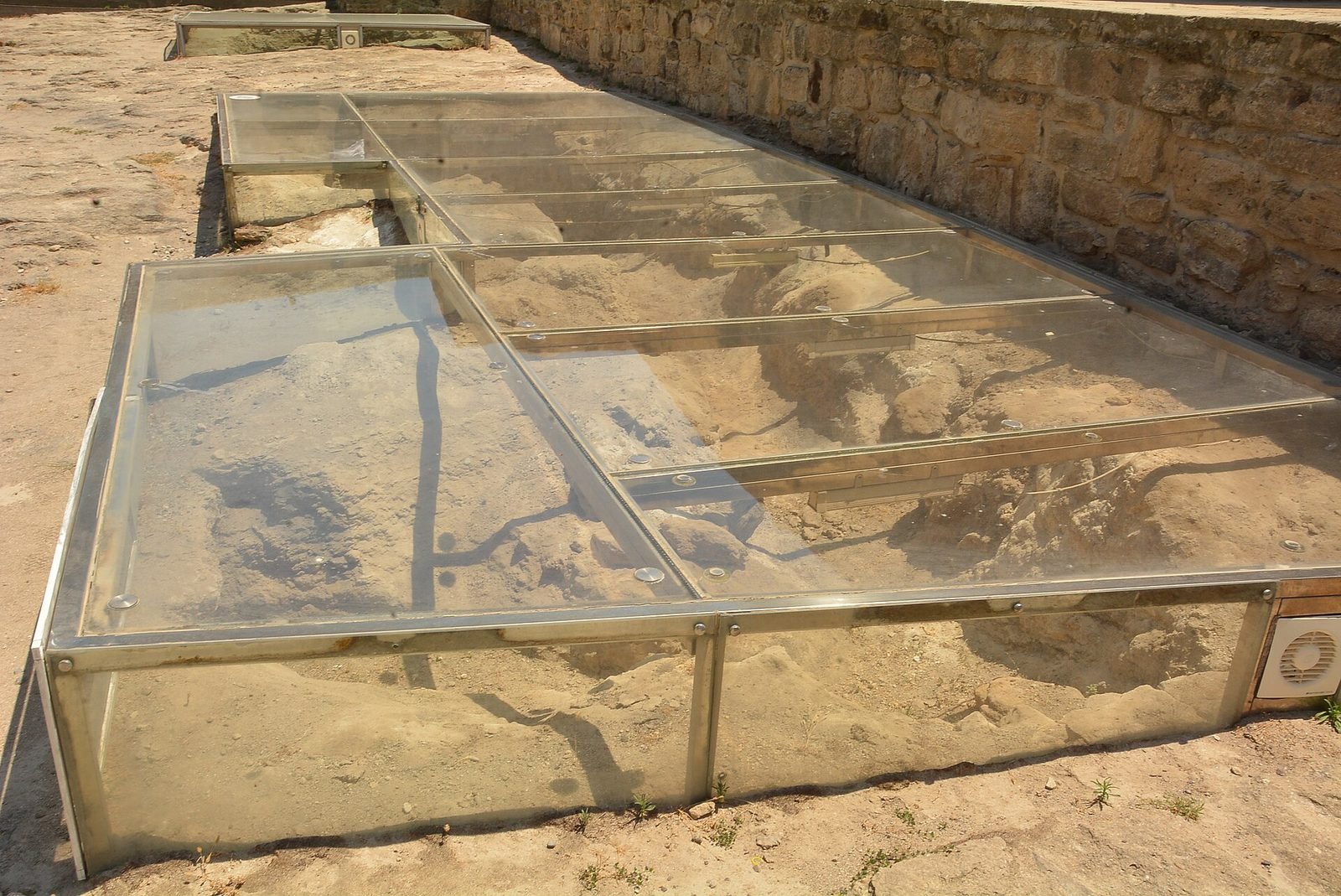
Scholars suggest that even before the present temple an ancient Zoroastrian shrine may have stood here: local people revered "seven holes with burning flame". Fire was sacred long before the Indian pilgrims arrived.
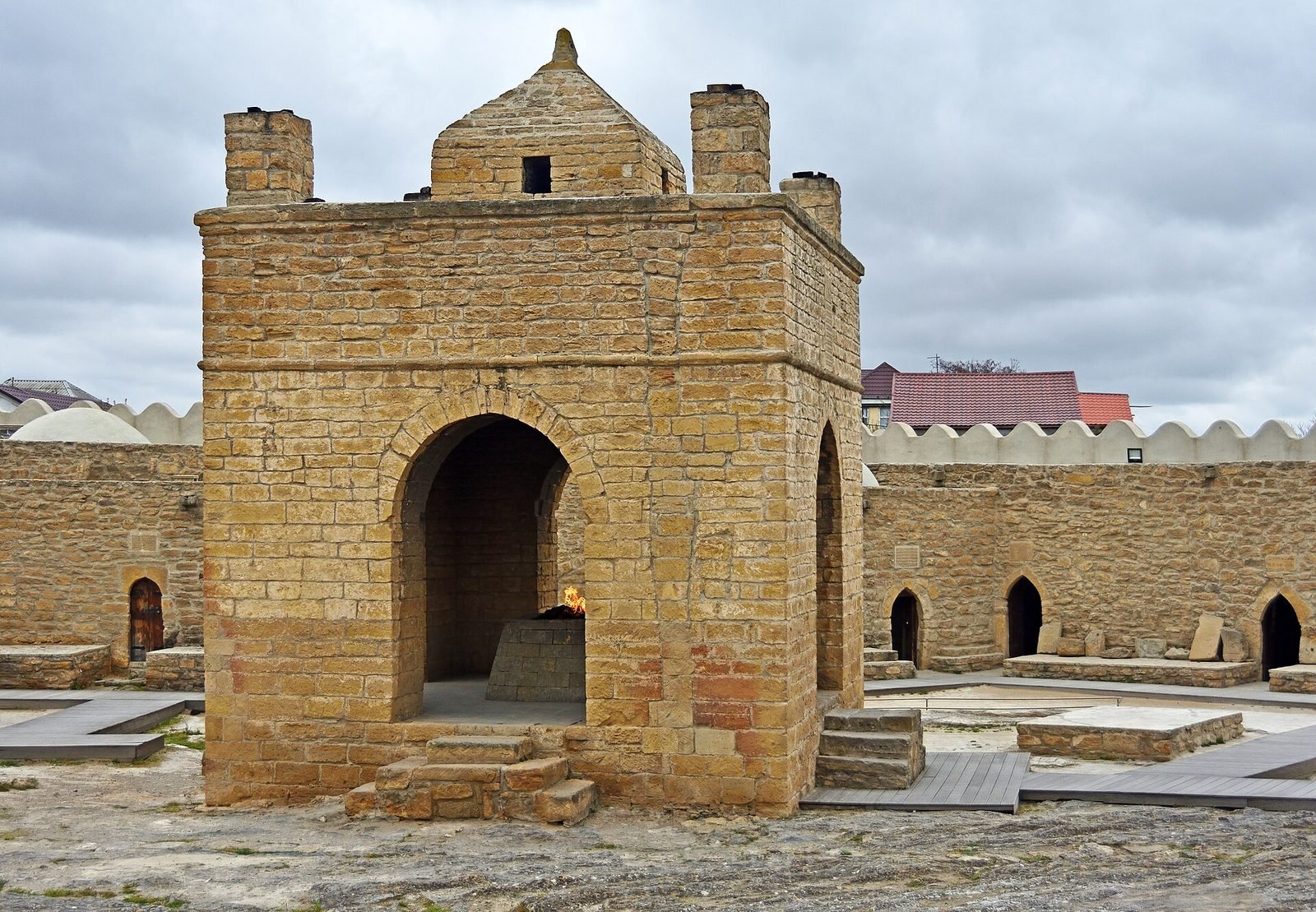
Construction of the surviving temple began in the 17th century. It is a pentagonal complex with cells around the edge and a central altar-chartaqi crowned by a dome, with a trishul — a Hindu trident — at its top.
History
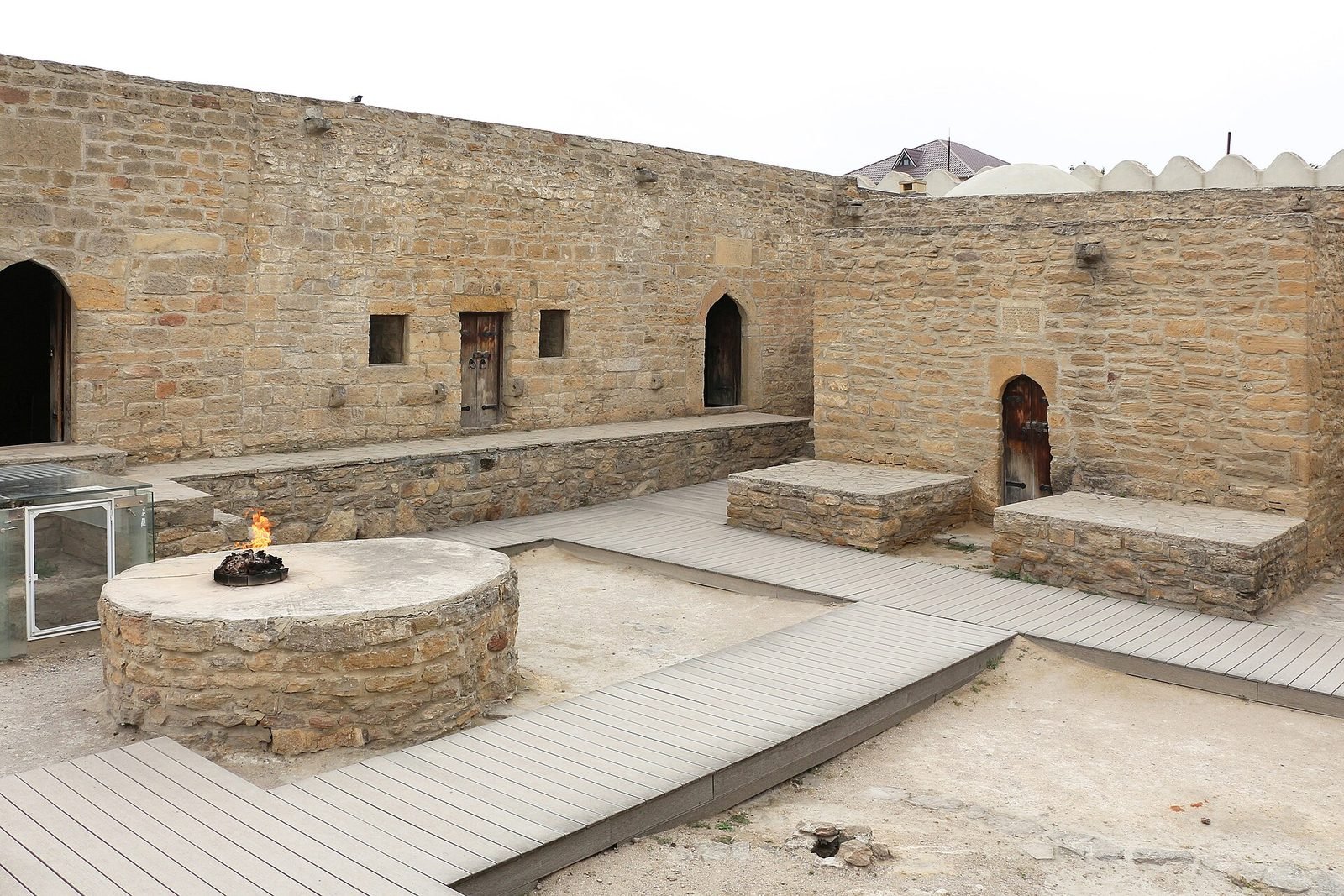
In the cells around the courtyard lived pilgrims and ascetics who came from afar. The temple was at once a shrine and an inn on a trade route — a place of prayer, rest and self-denial.
Inscriptions on the cell walls have carried down to us the names and prayers of those who lived here — in Sanskrit, Punjabi and Persian.
What the temple is made of
A caravanserai complex with cells around the edge and an altar at the centre.
A four-pillared domed pavilion over which the fire burned.
A Hindu trident atop the dome — a sign of the pilgrims from India.
Merchants and pilgrims came here across the Caspian and trade routes.
Datings and the early history of the temple differ across sources; the most common versions are given here.